

Imagine a teenager exploring the Arg of Karim Khan in Shiraz without ever travelling there. Through a phone screen, they move through its architecture, hear the poetry of Saadi, and encounter stories connected to the city’s past.
This is no longer science fiction. Digital technology is changing the way we encounter culture, and it is becoming an increasingly important tool for cultural sustainability. Heritage is no longer accessible only through physical travel, museums, archives or books; it can increasingly be experienced through digital maps, applications, audio archives, interactive storytelling and immersive environments.
This matters because when cultural knowledge disappears, we do not simply lose information. We lose part of the collective memory through which communities understand who they are, where they come from and how they relate to the world around them.
How can we design technology so that it helps culture remain alive?
Culture as a Living Memory
Cultural sustainability is about keeping the knowledge, traditions, languages, stories, rituals and values of communities alive across generations. It recognises that sustainability is not only environmental; culture, memory and identity also need systems that allow them to continue, adapt and remain meaningful.
But cultural continuity is not automatic. Languages disappear, oral stories stop being told, traditional skills lose practitioners and local rituals can become disconnected from younger generations. UNESCO has repeatedly highlighted the vulnerability of linguistic diversity, noting that a significant share of the world’s languages are at risk of disappearing.
You can read more about UNESCO’s work on linguistic diversity and endangered languages through UNESCO’s language and cultural diversity resources.
This makes cultural preservation more than an archival issue. It is also a design problem: how do we make cultural knowledge accessible, how do we create experiences younger generations genuinely want to engage with, and how do we preserve knowledge without reducing living cultures to static objects stored in databases?
Digital Technology as Collective Memory
Digital preservation is often imagined simply as scanning documents or creating online archives, but its potential is much broader. A digital platform can connect a story to a specific place, an application can introduce someone to an artwork every morning, and an interactive map can guide visitors through a heritage site while providing context, audio and personal narratives.
Technology can therefore do more than store culture. It can help people experience culture.
That distinction is important. A culture survives not only when information about it exists somewhere, but when people continue to interact with it, interpret it and carry it forward. This is where digital design can contribute directly to cultural sustainability.
From Archives to Everyday Cultural Experience
Some digital platforms work primarily as archives, while others turn heritage into an interactive or everyday experience. The strongest examples often combine both approaches: they preserve knowledge while making it easier to encounter, understand and share.
DailyArt — Bringing Art History Into Everyday Life
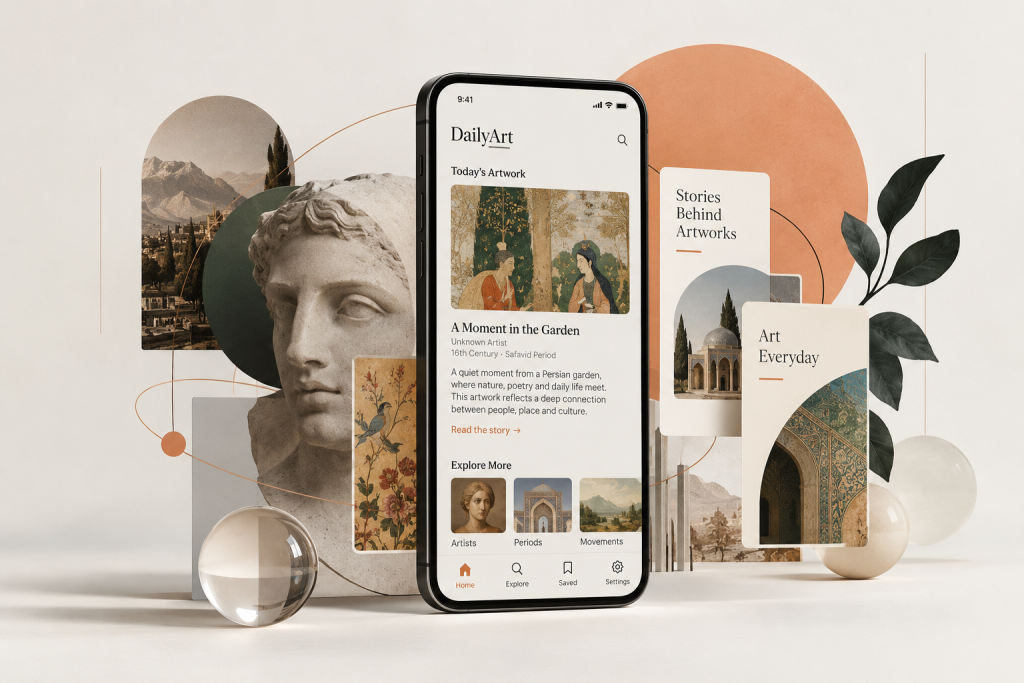
DailyArt presents artworks together with short stories about their historical context, significance or the artists behind them. Instead of requiring users to actively seek out an art-history course or museum archive, it places a small cultural encounter directly into everyday life.
This simple design choice matters. Regular and accessible encounters can make art history feel less distant or institutional, especially for people who may not regularly visit museums or study art formally. DailyArt demonstrates an important principle: meaningful cultural access does not always need to be complex.
Attractions.io — Extending the Cultural Visit
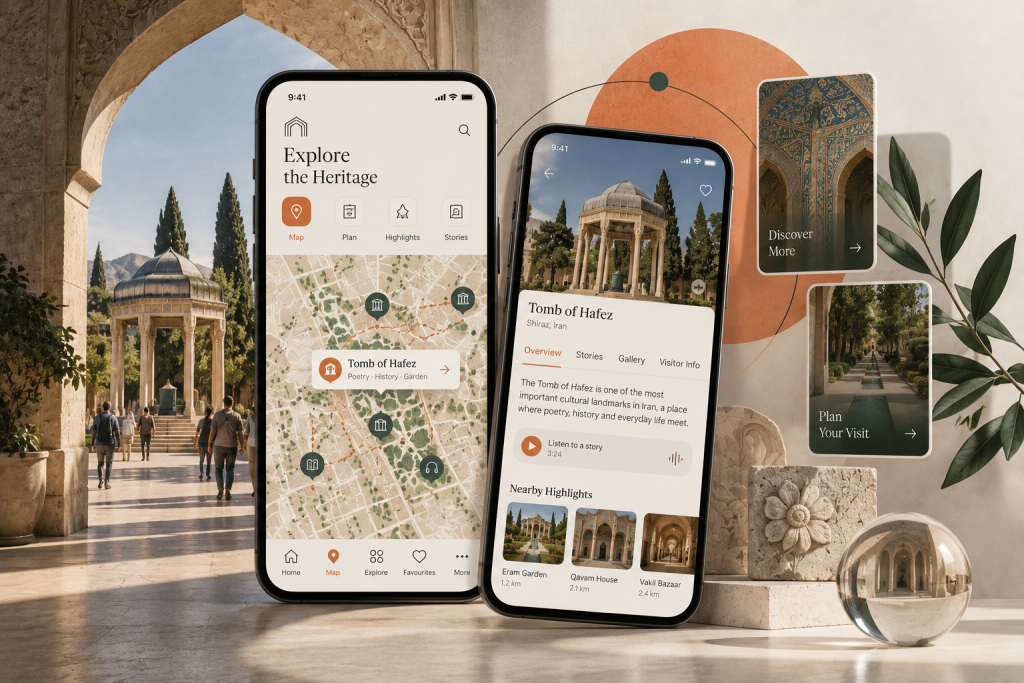
Digital access does not have to replace a physical experience; it can strengthen it. Attractions.io develops digital visitor experiences for attractions and heritage destinations, including tools for wayfinding, personalised planning and interactive information.
For cultural institutions, this changes the role of the app. It is no longer simply a digital brochure. It can become part of the visitor journey, helping people discover spaces, understand context and navigate cultural environments more intuitively.
A Note on World Heritage Apps
Map-based World Heritage applications offer another useful model by bringing information about cultural and natural heritage into searchable mobile environments. However, attribution matters. UNESCO currently states that there is no official UNESCO World Heritage mobile application presenting all World Heritage properties, and the development of such an official application has been discussed as a separate initiative.
More information is available through the UNESCO World Heritage Centre.
This distinction points to another responsibility in digital cultural communication: credibility is part of design. When technology mediates cultural knowledge, clear sourcing and institutional attribution are as important as visual quality.
Storytelling Can Turn Archives Into Living Heritage
Preservation becomes particularly powerful when digital tools combine information with story. A photograph may document a place and a map may identify where it exists, but a story can explain what that place means to the people connected to it.
This is where platforms such as Terrastories become especially relevant.
Terrastories — Mapping Stories to Place
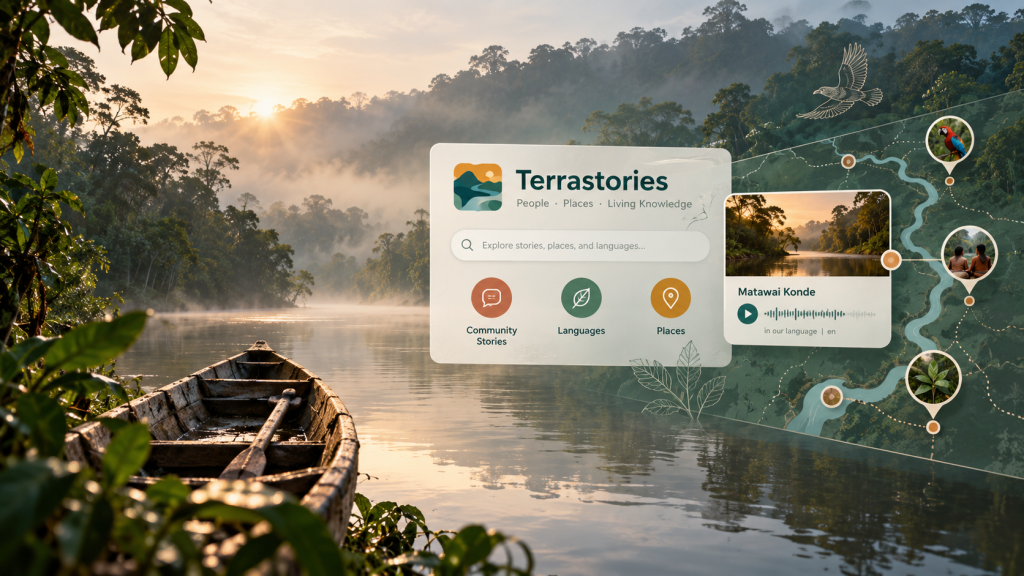
Terrastories is a free and open-source platform designed to help communities map, protect and share place-based stories. Oral histories, images and other media can be connected to specific geographic locations, while communities can also control which stories are public and which should remain restricted.
Its value is not simply that it digitises stories. Its deeper strength lies in the relationship it creates between place, memory, community and narrative.
In this model, digital design becomes a framework through which cultural knowledge can remain connected to the landscapes and communities that give it meaning.
ENACT — Learning Language Through Culture
ENACT approaches language learning through cultural activities rather than treating language as vocabulary and grammar alone. Users can encounter language through food, crafts, music, clothing, traditions and other forms of cultural practice.
This approach makes an important point: language and culture should not always be separated. A word can carry a history, object, behaviour, ritual or worldview with it. Digital learning can help preserve more of that context.
From Preservation to Participation
The strongest cultural technologies do not simply ask people to consume information. They invite users to explore, listen, contribute, map, document, create, learn, share and interpret.
This participatory dimension matters because culture is not sustainable when communities become passive subjects of documentation. Cultural sustainability becomes stronger when people can participate in deciding what is preserved, how it is represented and how it should be shared.
The future of digital cultural heritage therefore requires more than developers. It needs collaboration between designers, researchers, historians, educators, technologists and local communities.
This multidisciplinary way of thinking is also central to the work of AVAN Infinite Studio, where design is approached as a tool for connecting people, systems, culture and sustainable futures.
What Could This Mean for Iran?
Iran has an extraordinary diversity of languages, dialects, traditions, crafts, architecture, clothing, rituals, music and local narratives. Yet much of this knowledge remains fragmented: some exists in academic research, some is preserved in museums and archives, some survives in family memory, and some continues primarily through oral transmission.
For Iran, digital design could become an important pathway for cultural sustainability by connecting local knowledge, stories and traditions with younger generations.
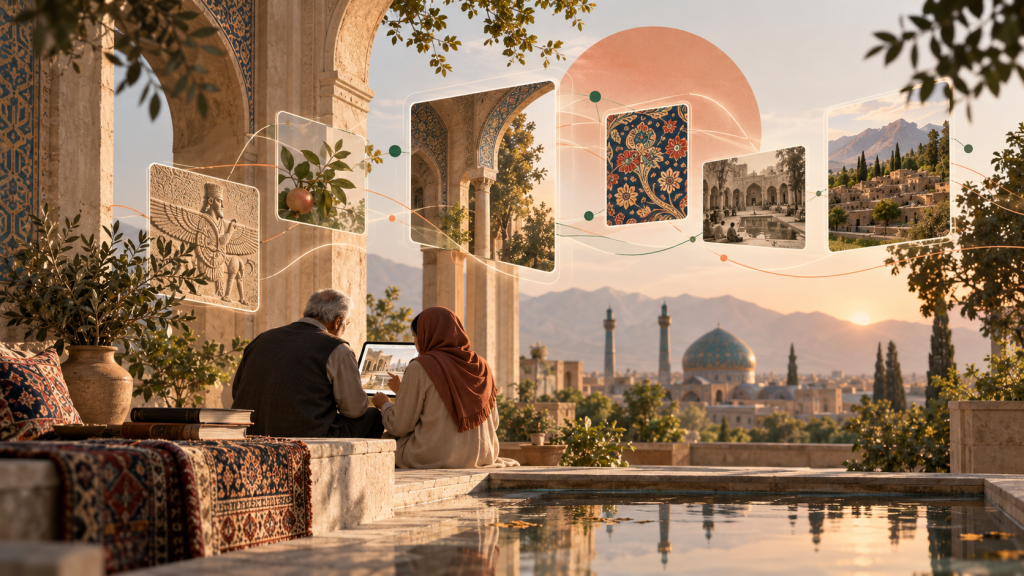
Imagine a digital storytelling map for every province. A child could tap a location in Fars and hear a local story connected to that landscape. An interactive archive could document regional clothing, music and rituals while explaining their social and historical meaning.
Imagine a platform where elders could record oral histories in local dialects, or an application in which children discover the story of a historic building rather than simply memorising its construction date.
In such a future, culture would no longer exist only behind museum glass or in history books. It could become part of everyday digital life.
Why Is This Still Difficult?
The challenge is not simply technological. Several structural barriers can make culturally meaningful digital projects difficult to develop.
Fragmented Cultural Resources
Historic photographs, oral histories, academic research and community knowledge are often scattered across institutions, private collections, families and local communities. Without coordination, valuable knowledge can remain difficult to access or disappear entirely.
Limited Digitisation
Much cultural material has still not been documented in accessible digital formats. Digitisation requires time, funding, technical infrastructure and careful decisions about ownership and access.
Weak Interdisciplinary Collaboration
Cultural technology requires designers, developers, researchers and cultural communities to work together, yet these groups do not always share the same language, priorities or processes. Strong projects need frameworks that allow different forms of expertise to meet.
Limited Participatory Design
A platform designed about a community is not necessarily the same as one designed with that community. Participation becomes particularly important when dealing with cultural ownership, sacred knowledge, privacy and representation.
An Opportunity for Designers
This is where design has an important role. The question should not simply be, “How do we digitise cultural heritage?” A more useful question is: How do we create digital experiences through which culture can continue to be understood, practised and reinterpreted?
This could lead to many different forms of cultural design:
- interactive cultural maps,
- oral-history archives,
- bilingual and multilingual storytelling platforms,
- digital tools for regional crafts,
- cultural games for children,
- immersive heritage experiences,
- community-controlled archives,
- and educational platforms built around local knowledge.
The possibilities are significant, but the starting point should not be technology. It should be people, context and cultural meaning.
Many of these questions also connect with AVAN’s wider approach to design and research projects, where sustainability is explored through different disciplines and forms of participation.
Principles for More Responsible Cultural Technology
Design with communities, not only for them
People whose cultures are represented should participate in deciding what is recorded, how it is interpreted and how it is communicated. Participation helps reduce the risk of cultural knowledge being removed from its original meaning.
Preserve context
A cultural object without its history, language or social meaning can quickly become decoration. Digital platforms should preserve relationships between objects, stories, people and places rather than presenting isolated fragments.
Respect different levels of access
Not all cultural knowledge should necessarily be publicly available. Some stories, rituals or forms of knowledge may belong only to particular communities or audiences. Platforms such as Terrastories demonstrate how digital systems can support different levels of access.
Design for future generations
Documentation alone is not enough. If younger generations cannot understand or engage with the experience, preservation risks becoming passive storage. Cultural technology should therefore consider accessibility, visual language, interaction and education.
Connect preservation with participation
The strongest cultural archive may be one that can continue to grow. Communities should be able to add stories, correct information, record new perspectives and participate in shaping how cultural memory evolves.
Conclusion — Preserve, Reinterpret, Pass It Forward
Digital access does not have to threaten culture. When designed responsibly, it can become one of the tools through which culture continues to evolve.
Technology can help document endangered languages, connect younger generations with places they have never visited, bring art into everyday life, link oral histories to landscapes and allow communities to preserve memories in their own voices.
But technology alone cannot create cultural sustainability. What matters is the relationship between technology and people. Cultural sustainability depends not only on preservation, but on creating meaningful ways for people to engage with culture and carry it forward.
If researchers, designers, developers, educators and local storytellers work together, digital environments can become spaces where collective memory continues to move from one generation to another.
If we do not record these stories today, tomorrow we may only find their traces in fading memories.

AVAN Perspective
At AVAN Infinite Studio, we see sustainability as more than an environmental question. Culture, memory, knowledge and identity also need systems that allow them to survive, adapt and move forward.
Digital design can become one of those systems: preserving what matters while translating it into experiences that remain relevant to future generations.
Preserve the memory. Reimagine the experience. Pass it forward.
Start a conversation with AVAN →